
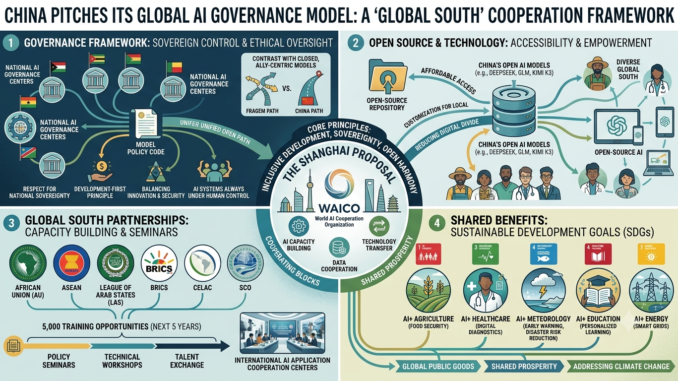
Artificial intelligence is moving faster than most laws can keep up. Every nation wants to benefit from this technology, but few have a clear roadmap for how to manage it safely. As China asserts itself as an AI powerhouse, it is offering a specific framework to other nations. By reaching out to developing nations, China pitches its AI governance model for the Global South as an alternative to existing rules. This plan focuses on state-led development and security, creating a distinct path that differs from Western approaches.
This push impacts how countries in Africa, Asia, and Latin America plan their tech futures. Understanding this approach helps to clarify why some nations align with Beijing’s vision while others pause. The model carries weight because it does not just suggest rules; it often comes with the infrastructure needed to turn those rules into reality.
Understanding China’s AI Governance Philosophy
China views AI as a national priority. Its governance style is built on the idea that the state should guide innovation to meet specific goals. This sets it apart from many Western models, which often emphasize individual rights or market-driven rules.
State-Centric Control and National Development
In China, the government plays a direct role in how AI grows. The state sets the tone for research and deployment. This approach ensures that AI efforts align with national economic plans and security needs. By keeping a firm hand on the wheel, Beijing aims to build technological sovereignty. It wants to avoid relying on outside tech providers for critical systems.
Data Sovereignty and National Security
Data is treated as a strategic asset in China. The government enforces strict rules about where data can be stored and who can access it. Policies require that data generated within the country stays inside its borders. This is framed as a key part of national security. It aims to prevent outside interference and keep critical information under state control.
Ethical Frameworks for Social Harmony
China’s approach to AI ethics is not focused on individual privacy in the same way as many Western frameworks. Instead, it prioritizes social stability and the collective good. AI systems are expected to prevent societal friction and support order. This focus creates a system where technology serves the state’s vision of a harmonious society.
The Appeal of China’s Model to the Global South
Many nations in the Global South are looking for ways to jumpstart their tech growth. They often see Western tech rules as barriers rather than helps. China’s proposal offers a way forward that feels more practical for their specific needs.
Addressing Developmental Gaps and the Digital Divide
Developing nations need tech that solves basic problems. They want to improve agriculture, healthcare, and city planning. China positions its AI solutions as tools to bridge these gaps. By offering ready-made systems, Beijing helps these countries improve services without waiting for local tech sectors to build everything from scratch.
An Alternative to Western Dominance
Western AI regulations often focus on limiting power in tech firms or protecting individual data rights. Some leaders in the Global South find these rules difficult to follow. China offers a different narrative. It provides a model that allows nations to assert their autonomy. They can build AI capacity without signing on to rules they view as biased or out of reach.
Infrastructure and Investment Partnerships
China does not just share ideas; it provides the hardware. Through the Digital Silk Road, Beijing invests in data centers, cables, and networks across the Global South. This infrastructure makes it easy for nations to adopt China’s AI tools. It creates a complete package of hardware and rules that is hard to ignore for countries with limited budgets.
Key Pillars of China’s Proposed AI Governance Framework
Beijing outlines clear principles for how it thinks AI should be managed. These pillars guide its partnerships abroad.
Principles of Responsible AI Deployment
China advocates for fairness and human oversight in AI systems. Its policy documents emphasize that AI should be transparent and secure. The goal is to make sure technology benefits the public without creating risks. These guidelines provide a framework that countries can adapt to their own legal systems.
Standards and Regulations for AI Systems
China wants to set the rules of the road for the global tech community. It pushes for international standards that align with its technical requirements. By influencing these standards, Beijing ensures its tech products remain compatible and competitive in more markets. It actively works with international groups to promote this vision.
Capacity Building and Talent Development
A major part of China’s plan involves training. It offers programs for scientists and engineers from the Global South to learn from Chinese experts. This tech transfer helps countries build their own AI skills. It strengthens the ties between these nations and Beijing, making it more likely that they will continue to use Chinese-backed AI models.
Case Studies and Real-World Applications
The impact of China’s AI governance is already visible in several regions.
AI Adoption in African Nations
Many African countries work with Chinese firms to modernize cities. In several capitals, smart city tech helps manage traffic and improves police response times. These projects often use facial recognition and surveillance tools. Governments in these nations view this as a way to boost safety and efficiency.
South American Engagement with Chinese AI Governance
South American nations are also looking to China for tech solutions. Some governments have signed deals for digital finance platforms and cloud systems. These partnerships often include agreements on how to manage data. By aligning with Chinese standards, these countries hope to gain easier access to advanced AI tools.
Asian Partnerships and Shared Principles
Neighbors in Asia often share similar goals regarding AI. They prioritize fast growth and economic stability. Collaborations here often focus on cross-border tech projects. These nations frequently adopt shared guidelines that emphasize state-led tech development, mirroring the approach taken by Beijing.
Challenges and Criticisms of China’s AI Governance Model
The spread of this model brings significant debate. Not everyone welcomes the influence of China’s approach to technology.
Concerns Over Surveillance and Human Rights
Critics argue that China’s model enables mass surveillance. They worry that technology meant for social order can be used to limit freedom of speech and political dissent. Many rights groups fear that importing these systems will weaken democracy in the recipient countries. The focus on stability over individual rights remains a major point of contention.
Data Security and Privacy Risks
Data sharing with Chinese-backed systems raises questions about privacy. There are concerns that citizens’ data could be accessed by foreign actors. In countries with weak privacy laws, this creates high risks for regular people. It puts their personal information in the hands of entities that operate under different legal standards.
Geopolitical Implications and Technological Dependence
Aligning with China’s AI governance model can lead to long-term dependence. Once a country builds its digital infrastructure on Chinese tech, it is difficult to switch to other systems. This locks nations into a relationship with Beijing, which changes their position in global affairs. It grants China significant leverage over the technological future of its partners.
Navigating the Future
The world is moving toward a split in how AI is managed. It is no longer a single set of rules led by one power.
The Changing State of AI Rules
China’s initiative ensures that multiple models will exist. Some nations will follow Western rules, while others will adopt the Beijing model. This creates a more divided space for tech. It will be harder to agree on a single global set of AI standards.
Strategies for Global South Nations
Nations in the Global South should be careful as they choose their partners. They need to test how new tech fits with their own values. Adopting foreign tools should not mean giving up control over their own data or laws. Local leaders must weigh the quick gains of Chinese infrastructure against the potential for long-term lock-in.
The Path Towards Equitable AI Development
True progress requires technology to serve all people. It should not create new forms of control or dependency. To achieve equitable growth, nations must seek tech that is open and transparent. The goal should be to build systems that protect rights while fueling economic progress, no matter which model they choose to follow.
Final Thoughts
China’s efforts to promote its AI governance model are reshaping the global tech map. For many developing nations, these partnerships offer a clear path to growth. Yet, the price of this support includes new security and privacy risks. As the use of AI grows, every country must decide how to balance its need for new tools with the need for freedom. The future of AI will depend on these choices. Countries that protect their own interests while choosing partners will be the ones that succeed in the long run.
Leave a Reply